Sailing the Shifting Tides: Navigating Top Marketing Trends and Predictions in 2026
- May 5
- 2 min read

Marketing in 2026 is evolving into a space where advanced technology and human behaviour are more connected than ever. While artificial intelligence (AI), automation, and data are transforming how brands operate, consumers are also becoming more intentional and selective in their decisions. Marketing is no longer just about visibility, but about delivering real value, building trust, and showing up at the right moment in a complex, non-linear customer journey.
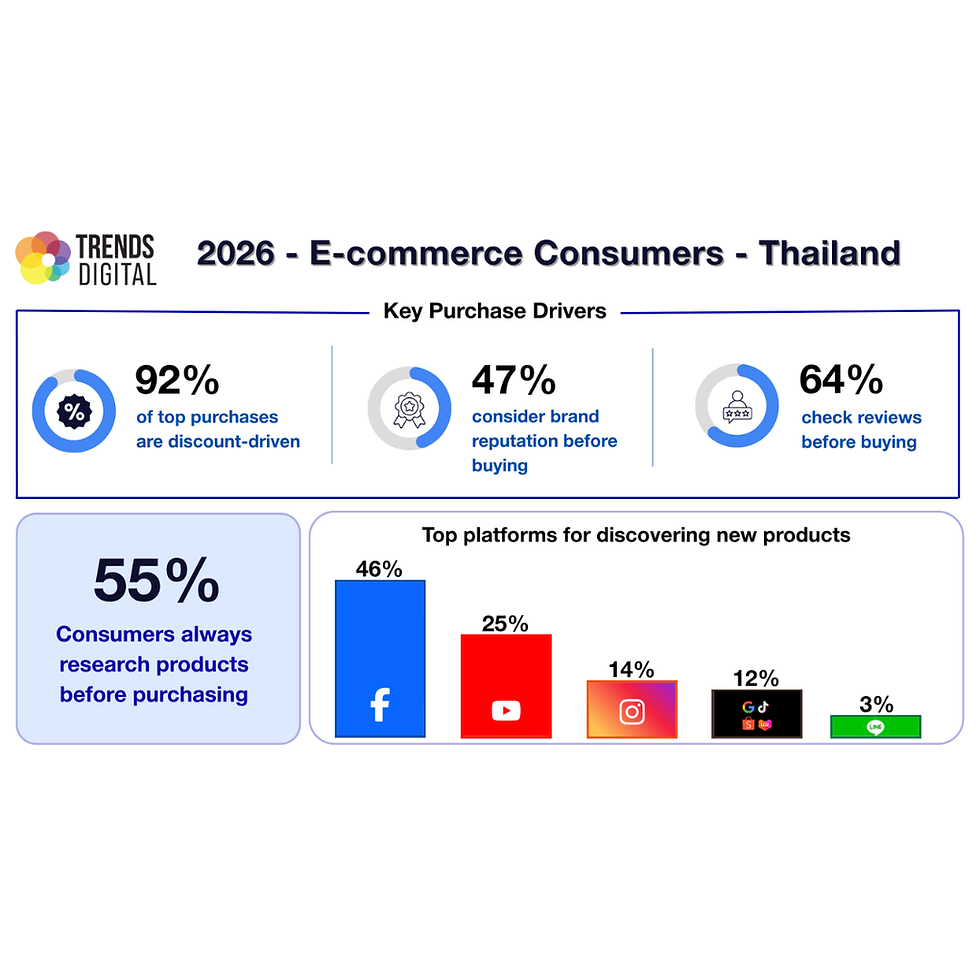
1. Why Value Matters More Than Price
Consumers are shifting away from price-driven decisions and focusing more on overall value, including quality, durability, and long-term benefits. This reflects a move toward a value ecosystem, where purchasing decisions are shaped by the full experience, from product performance to brand trust. As a result, brands must communicate not just affordability, but why their offering is worth the investment.
2. How AI Is Changing the Way We Decide
Artificial intelligence is becoming part of how consumers make decisions. Through agentic AI, systems can research, compare, and recommend products on behalf of users. This means brands must ensure their content is not only engaging for people but also structured clearly for algorithms, making accuracy and clarity more important than ever.
3. From Search Results to Smart Answers
Search behaviour is evolving as AI platforms deliver direct answers instead of lists of links, leading to Generative Engine Optimization (GEO). Unlike traditional SEO, GEO focuses on being a trusted source that AI systems reference. Brands must create content that is credible, insightful, and easy to understand to remain visible.
4. The New, Non-Linear Customer Journey
The traditional funnel has evolved into a more complex, “pretzel-shaped” journey where consumers move across platforms before making decisions. Discovery, research, and purchase often happen simultaneously. Brands must maintain a consistent presence and ensure a seamless experience across all touchpoints.
5. Why Physical Experiences Still Matter
Despite digital growth, consumers are seeking real-world experiences. This offline renaissance reflects a desire for tangible interactions that build trust and authenticity. By combining digital convenience with in-person engagement, brands can create more meaningful and memorable experiences.
6. The Power of Familiarity and Nostalgia
In a fast-changing environment, consumers are drawn to what feels familiar. Nostalgia-driven marketing uses past styles and cultural references, reimagined for modern audiences, to create emotional connections and build trust.
7. Making Sustainability Practical and Real
Sustainability is becoming a practical factor in decision-making. Consumers are looking for tangible benefits such as longer-lasting products and reduced waste. Brands must go beyond messaging and demonstrate real, measurable impact.
8. Building Trust Through Transparency
As data privacy concerns grow, consumers expect transparency in how their information is used. This has increased the importance of first-party data and ethical data practices. Trust is now a key driver of long-term relationships.
Marketing in 2026 is defined by balance, between technology and humanity, speed and strategy, and innovation and trust. As consumer expectations continue to evolve, brands that focus on delivering value, building credibility, and adapting to changing behaviours will be best positioned to navigate the shifting tides and achieve sustainable growth.