Online Shopping Trends in Thailand 2026
Updated: Jul 14

Thailand’s online shopping behaviour is becoming more frequent, platform-driven, and trust-led. Based on Trends Digital’s 2026 survey of Thai consumers aged 21–50, the findings show that e-commerce is no longer separate from content consumption. Consumers are increasingly buying through the same digital platforms where they discover products, follow creators, and engage with brands.
For businesses, this means online shopping strategy in 2026 needs to go beyond simply listing products on marketplaces. Brands need to understand where consumers shop, what motivates them to buy, and how to build confidence before conversion.
Here are the 4 key online shopping trends shaping Thai consumers in 2026 based on our research:
1. The Platform Battle: Shopee Leads, TikTok Shop Gains Ground
Shopee Remains the Main Marketplace: Shopee is the most-used e-commerce platform among respondents, with 63% selecting it as their main platform. This confirms that Shopee remains a critical channel for online visibility, product discovery, and sales conversion.
TikTok Shop Is Becoming a Serious Challenger: TikTok Shop ranks second at 21%, ahead of Lazada. Its growth reflects the rise of content-led commerce, where consumers can move from watching product content to purchasing within the same platform.
Lazada Still Holds Market Relevance: Lazada remains the most-used platform for 16% of respondents. While it sits behind Shopee and TikTok Shop, it still plays a role in the broader e-commerce ecosystem, especially for consumers who compare options across platforms.

Source: Consumer Survey conducted by Trends Digital™ in Thailand, January 2026
2. Online Shopping Has Become a Weekly Habit
Weekly Shopping Is the Norm: 70% of respondents shop online at least weekly, showing that e-commerce has become part of regular consumer behaviour rather than an occasional activity.
A Stable Base of Monthly Online Shoppers: 23% of respondents shop online monthly, showing a steady group of regular buyers who purchase often enough to be a key target for repeat sales and retention efforts.
Rare Shoppers Are the Minority: Only 7% shop online rarely, suggesting that online shopping is now deeply embedded in consumer routines. For brands and businesses, this creates a need for consistent product visibility, updated listings, and always-on digital sales activity.
3. Promotions Drive Attention, but Trust Drives Conversion
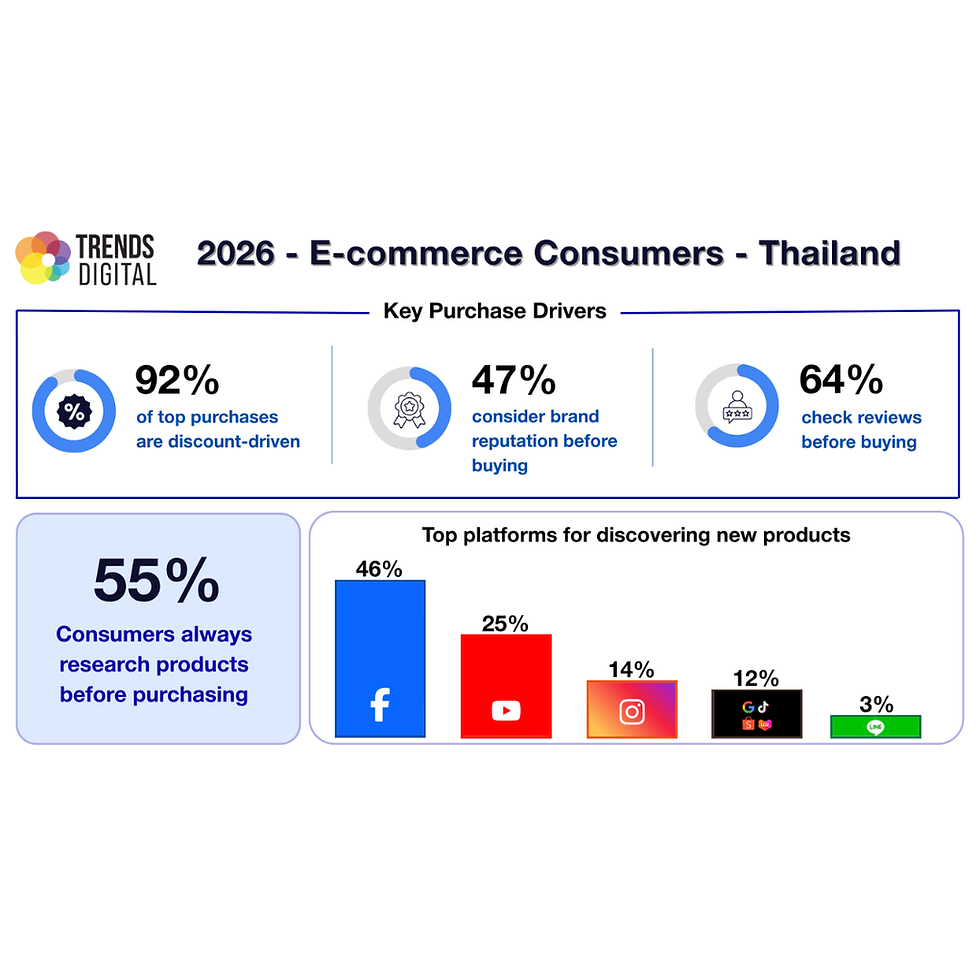
Discounts Are the Strongest Purchase Trigger: 92% of respondents said discounts or promotions motivate them to buy online. This shows that price incentives remain highly influential in Thailand’s online shopping market.
Reviews Reduce Purchase Risk: Product reviews or ratings influence 64% of respondents, making them the second-strongest motivation for buying online. This highlights the importance of visible customer feedback and credible product validation.
Brand Reputation Still Matters: 47% are influenced by brand reputation, showing that consumers still look for reliability, even when promotions are attractive. Strong offers may attract clicks, but trust is often what turns interest into purchase.
4. Social Proof Is Becoming a Key Purchase Driver
People Influence Buying Decisions: Friends or family influence 40% of respondents, showing that word-of-mouth remains powerful even in digital shopping environments.
Influencers Continue to Support Discovery: Influencers motivate 36% of respondents, especially when product content feels relevant, relatable, and connected to everyday use.
Convenience Still Plays a Role: 35% are motivated by convenience, highlighting the importance of a smooth shopping experience, clear product information, easy checkout, reliable delivery, and accessible customer support.

Source: Consumer Survey conducted by Trends Digital™ in Thailand, January 2026
What This Means for Businesses in 2026
E-commerce needs to be multi-platform: Shopee remains essential, but TikTok Shop’s growth shows that businesses should also consider how content and commerce work together.
Visibility must be consistent: With many consumers shopping weekly or daily, brands need regular campaigns, updated product pages, and strong marketplace presence.
Promotions should be supported by proof: Discounts can capture attention, but reviews, ratings, and brand reputation help build the confidence needed to convert.
Social proof should be part of the sales journey: Influencers, customer reviews, and word-of-mouth can support both discovery and purchase confidence.
Content and commerce should work together: The strongest e-commerce strategies will connect social content, creator activity, marketplace visibility, and conversion into one clear customer journey.
In 2026, online shopping in Thailand is not only about convenience. It is shaped by platform choice, purchase frequency, promotions, trust, and social proof. Businesses that connect these elements clearly will be better positioned to turn consumer attention into sales.